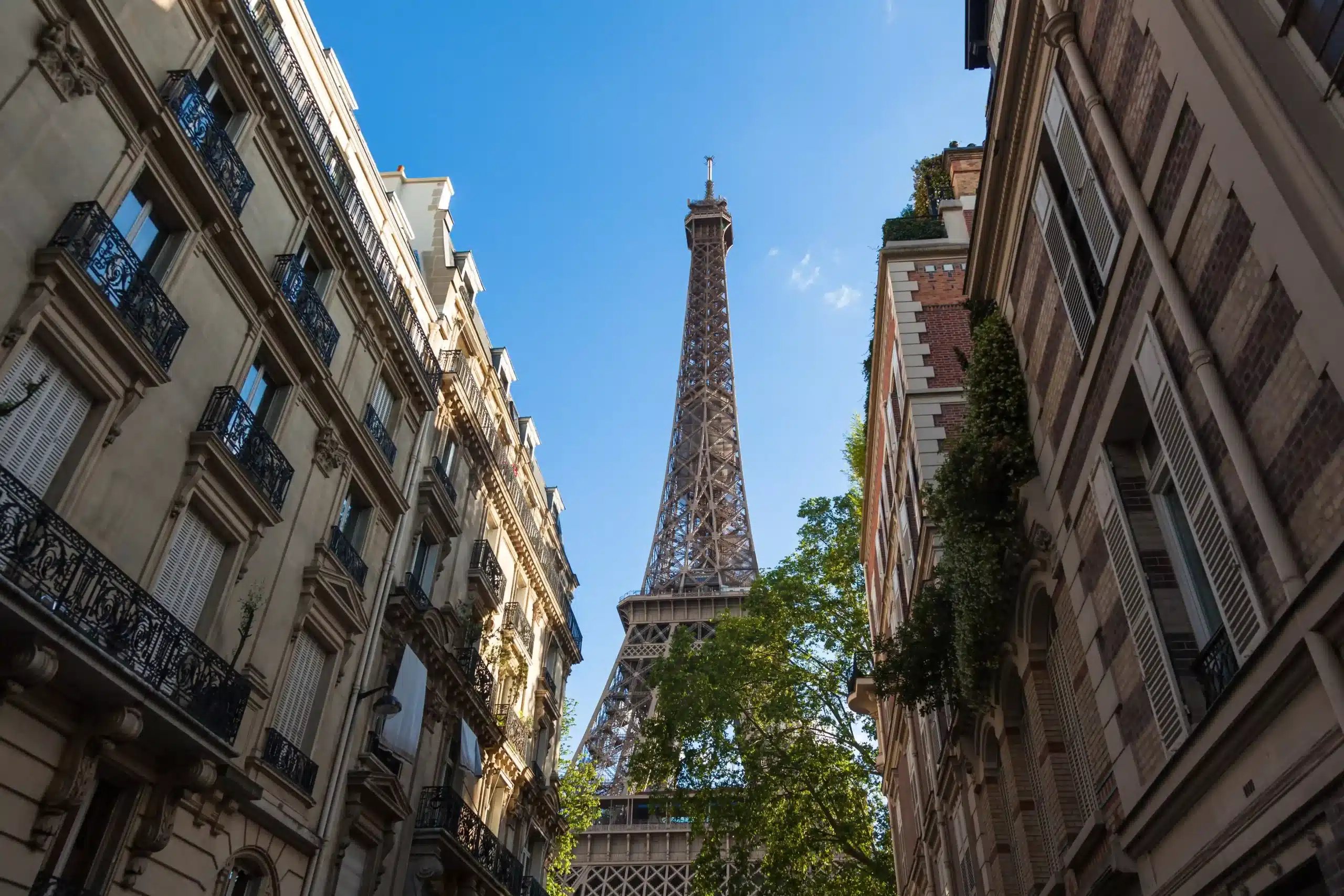
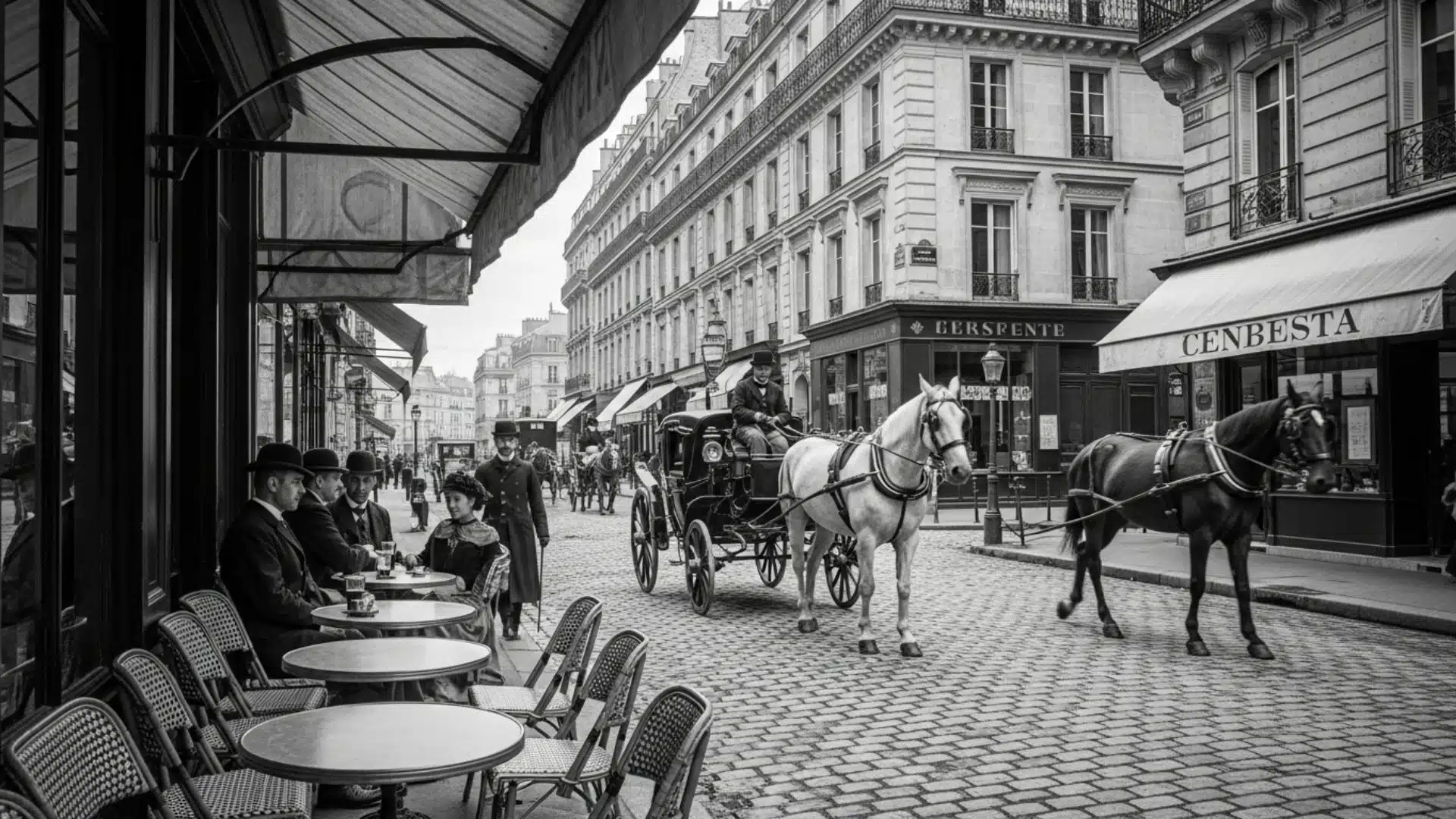
When you’re exploring Paris real estate whether you’re buying, investing, or simply daydreaming the city’s architectural heartbeat is obvious: Haussmannian façades, narrow cobbled streets, historic hôtels particuliers. But equally timeless and deeply tied to neighborhood character are Paris’s oldest restaurants and cafés, and they’re more than just places to eat. They are vibrant cultural anchors that help define the soul of a district.
At MetParis, we believe that the lifestyle potential of a property is shaped not only by its walls, but by what’s around it the narratives, tastes, and rituals that give a neighborhood its identity. Here’s a curated journey through some of Paris’s most venerable eateries, and how they connect to the value and charm of local real estate.
Historic Gastronomy, Modern Lifestyle: A Neighborhood Guide
Le Procope (1686)
Famously founded by Francesco Procopio dei Coltelli, Le Procope in the Latin Quarter is often seen as Paris’s oldest café. Philosophers, writers, and revolutionaries such as Voltaire, Diderot, and Franklin regularly met there.
Real estate lens: The Latin Quarter’s character — intellectual, historic, and bohemian — is amplified by landmarks like Le Procope. Investing in or living in this area means being part of a storied literary and cultural legacy.
La Maison Stohrer (1730)
This is Paris’s oldest pâtisserie, founded by Nicolas Stohrer and still enchanting pastry lovers today.
Real estate lens: Located in the 2nd arrondissement, near Rue Montorgueil, Stohrer adds daily sweetness to neighborhood life. For future residents, having such a timeless bakery nearby means preserving a taste of history in everyday routines.
Au Chien Qui Fume (1740)
A brasserie not far from Les Halles, the literally “Smoking Dog” restaurant has been welcoming diners since 1740.
Real estate lens: This area is central and lively. A historic brasserie like Au Chien Qui Fume contributes to the local authenticity and gives both visitors and residents a sense of rootedness in Paris’s gastronomic past.
Lapérouse (1766)
Lapérouse, with its riverbank setting and elegant private dining salons, has long been a gathering place for writers, lovers, and diners looking for romance and tradition.
Real estate lens: Its location along the Seine speaks to a certain old-world Parisian grandeur. For those considering luxury properties near Saint-Germain or due south on the Left Bank, Lapérouse reflects the kind of gastronomic prestige that enhances a neighborhood’s reputation.
Historic Gastronomy, Modern Lifestyle: A Neighborhood Guide
Le Tour d’Argent (1582)
Perched on the Seine at Quai de la Tournelle, Le Tour d’Argent is one of Paris’s most legendary dining institutions. With roots going back to 1582, it has served royalty, celebrities, and gourmands across the centuries.
Real estate lens: Property along the Seine and in the 5th arrondissement benefits from the prestige of this address. Proximity to establishments like Tour d’Argent signals a refined, historic luxury — ideal for buyers who value heritage.
La Petite Chaise (1680)
Often regarded as the oldest restaurant in Paris, La Petite Chaise retains a charming, old-Paris feel with its traditional décor and classic French menu.
Real estate lens: Located near Le Marais, a neighborhood that MetParis frequently highlights for its mix of art, history, and vibrancy, this restaurant underscores the district’s continuity and soul. The Marais is known for beautifully preserved hôtels particuliers and a lively local culture.
Le Procope (1686)
Famously founded by Francesco Procopio dei Coltelli, Le Procope in the Latin Quarter is often seen as Paris’s oldest café. Philosophers, writers, and revolutionaries such as Voltaire, Diderot, and Franklin regularly met there.
Real estate lens: The Latin Quarter’s character — intellectual, historic, and bohemian — is amplified by landmarks like Le Procope. Investing in or living in this area means being part of a storied literary and cultural legacy.
La Maison Stohrer (1730)
This is Paris’s oldest pâtisserie, founded by Nicolas Stohrer and still enchanting pastry lovers today.
Real estate lens: Located in the 2nd arrondissement, near Rue Montorgueil, Stohrer adds daily sweetness to neighborhood life. For future residents, having such a timeless bakery nearby means preserving a taste of history in everyday routines.
Au Chien Qui Fume (1740)
A brasserie not far from Les Halles, the literally “Smoking Dog” restaurant has been welcoming diners since 1740.
Real estate lens: This area is central and lively. A historic brasserie like Au Chien Qui Fume contributes to the local authenticity and gives both visitors and residents a sense of rootedness in Paris’s gastronomic past.
Lapérouse (1766)
Lapérouse, with its riverbank setting and elegant private dining salons, has long been a gathering place for writers, lovers, and diners looking for romance and tradition.
Real estate lens: Its location along the Seine speaks to a certain old-world Parisian grandeur. For those considering luxury properties near Saint-Germain or due south on the Left Bank, Lapérouse reflects the kind of gastronomic prestige that enhances a neighborhood’s reputation.
Le Grand Véfour (1784)
Nestled in the arcades of the Palais-Royal, Le Grand Véfour features opulent interiors, gilded mirrors, and a storied past — from Napoleon to Victor Hugo.
Real estate lens: Palais-Royal-adjacent real estate is already deeply steeped in history and culture. The presence of a legendary restaurant like Grand Véfour further elevates the luxury and desirability for buyers seeking an address with gravitas.
Au Rocher de Cancale (1804)
A seafood-focused restaurant, bringing the coastal charm of Cancale into the heart of Paris in the 2nd arrondissement.
Real estate lens: This culinary nod to the sea gives the neighborhood a unique flavor — literally. It appeals to buyers who appreciate both historical authenticity and culinary distinction in a very Paris-central location.
L’Escargot Montorgueil (1832)
On the bustling Rue Montorgueil, this restaurant is known for its signature snails and golden snail signage.
Real estate lens: Montorgueil is one of Paris’s most beloved market streets, filled with shops, cafés, and food markets. Having a historic restaurant there amplifies the sense of community, walkability, and everyday elegance — great for residential appeal.
Polidor (1845)
A no-frills, communal restaurant in the Latin Quarter, Polidor was once a gathering spot for literary figures like James Joyce.
Real estate lens: This is the kind of place that draws in writers, students, and intellectuals. For properties in the Latin Quarter, Polidor contributes to an atmosphere of authenticity and creative energy.
Café de la Paix (1862)
Located by the Opéra Garnier, this café exudes 19th-century glamour with its opulent décor and historic clientele.
Real estate lens: The Opéra neighborhood is iconic. For high-end residential or investment properties around the Opera or Grands Boulevards, Café de la Paix is more than a landmark — it’s a symbol of Belle Époque luxury.
Brasserie Bofinger (1864)
One of Paris’s oldest brasseries, Bofinger features a stunning Belle Époque interior with ornate stained-glass ceilings and hearty Alsatian fare.
Real estate lens: Located in the Marais, Bofinger adds historic brasserie charm to one of Paris’s most dynamic and desirable districts. This contributes to the neighborhood’s mix of art, history, and gastronomy — a strong selling point.
Le Train Bleu (1901)
Housed in Gare de Lyon, this restaurant is a masterpiece of Belle Époque design, featuring frescoes, chandeliers, and carved wood.
Real estate lens: For properties near Gare de Lyon or in transit-oriented investments, having Train Bleu as a neighbor is a unique value-add — blending travel, history, and luxury
La Rotonde Montparnasse (1911)
Opened in 1911, this brasserie on Boulevard Montparnasse was a favorite haunt of Picasso, Modigliani, and other artists.
Real estate lens: Montparnasse carries a legacy of artistic bohemia. Real estate here is infused with that creative heritage; a place like La Rotonde underscores its cultural and historical richness.
Why These Historic Places Matter for MetParis Clients
- Lifestyle Value: Buyers and renters don’t just want an apartment; they want a life. Historic restaurants like these provide texture, tradition, and a deep sense of place.
- Neighborhood Identity: These culinary institutions help define their neighborhoods — Latin Quarter, Marais, Montparnasse, Seine districts — in ways that go beyond architecture.
- Cultural Capital: A property near Le Procope or Grand Véfour carries more than square meters; it carries legacy and prestige.
- Long-Term Appeal: These places have survived revolutions, wars, and modernization. Their endurance reflects the stability and timelessness many real estate clients are looking for.
- Tourism & Investment: For investor clients, proximity to iconic, historic dining spots can be a draw for both short-term rentals and lifestyle-focused tenants.
Considering Buying in Paris?
MetParis works exclusively with international buyers to help them navigate neighborhoods, pricing, off-market opportunities, and negotiations.
If you’d like a clearer picture of how these market trends affect your specific criteria or you’re curious about what is currently available in your favorite arrondissements we’re here to help.
Download our free guide to
buying property in Paris
Other articles
Paris Real Estate News & Market Update (2026)
Property Market Snapshot After two years of correction, the Paris real estate market has entered a phase of healthy stabilization
Understanding Mortgage Rate France interest for Non-Residents
Key takeaways Fixed-rate mortgages remain competitive for typical 15- to 25-year terms, with rates ranging from the low 3% range up to the mid-4%
Buying an Apartment in Paris from the U.S. – A 6th Arrondissement Success Story
What It’s Really Like to Buy and Renovate an Apartment in Paris as an American Carol and Bill had long