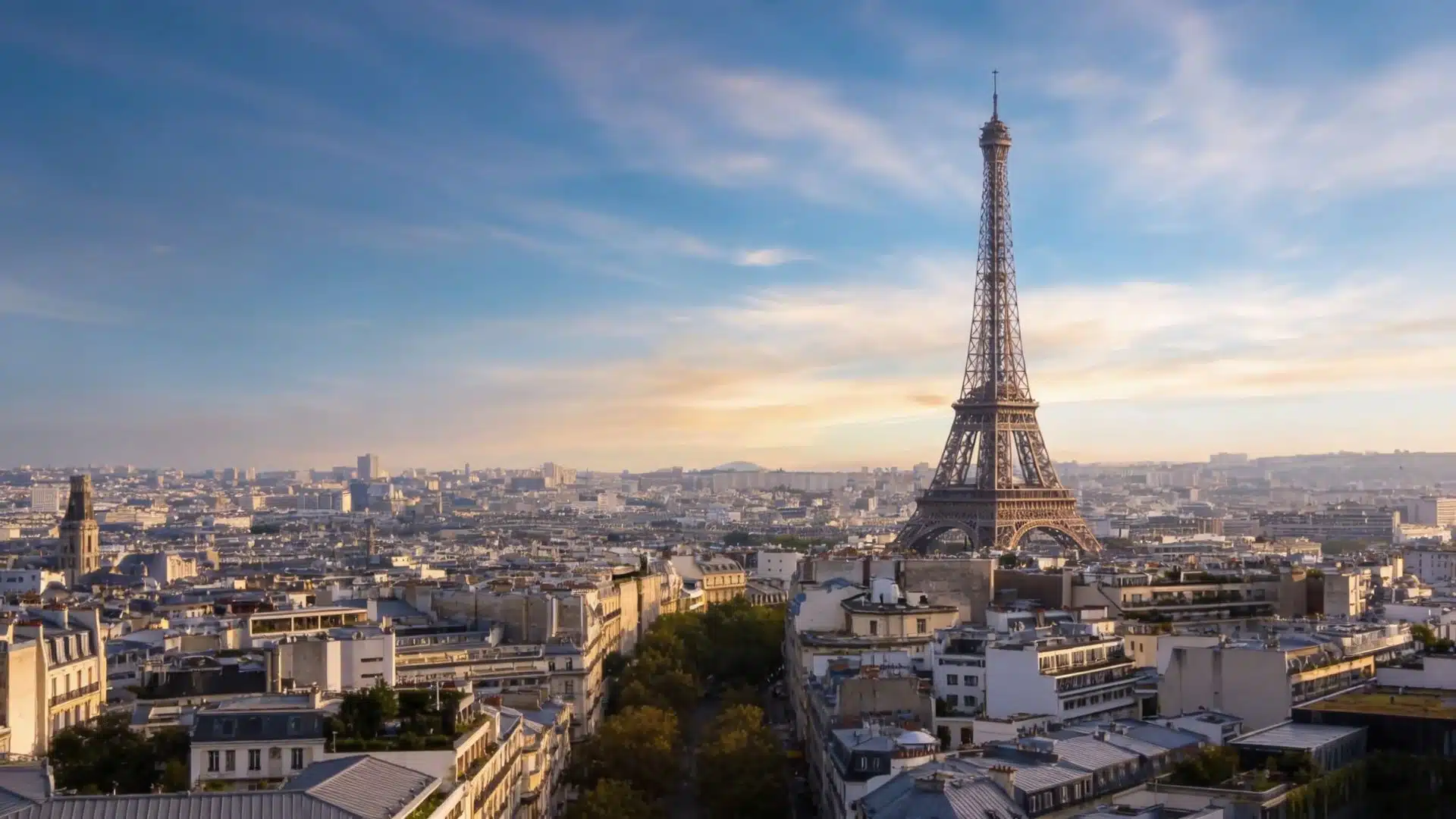

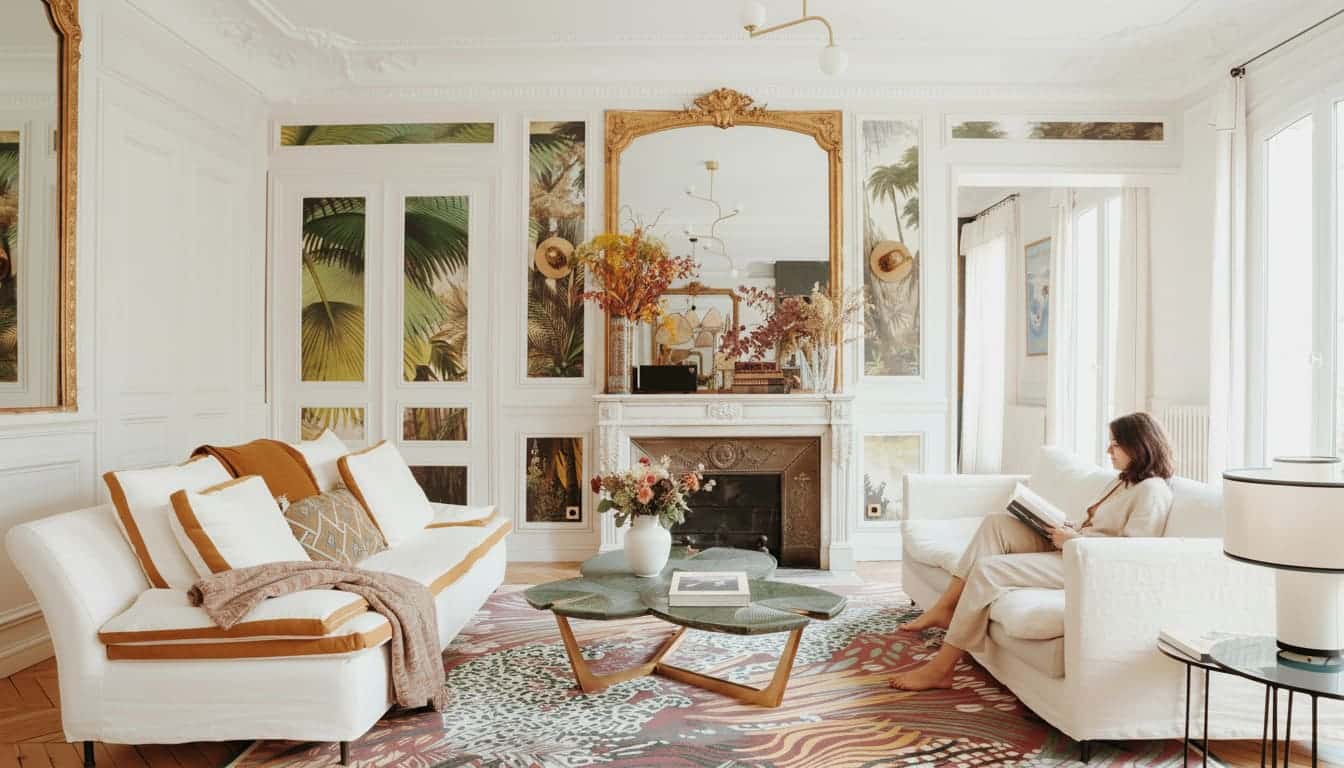
In 2026, American demand for Paris real estate is no longer a passing headline or a reactionary trend. It reflects a deeper, more deliberate shift—one driven by lifestyle priorities, portfolio diversification, and a growing preference for cities that reward long-term ownership over short-term speculation.
Paris has reasserted itself as a reference market: not only emotionally compelling, but structurally resilient.
Paris as a Lifestyle Decision—Not a Bet
For American buyers, Paris represents something increasingly rare among global capitals: continuity.
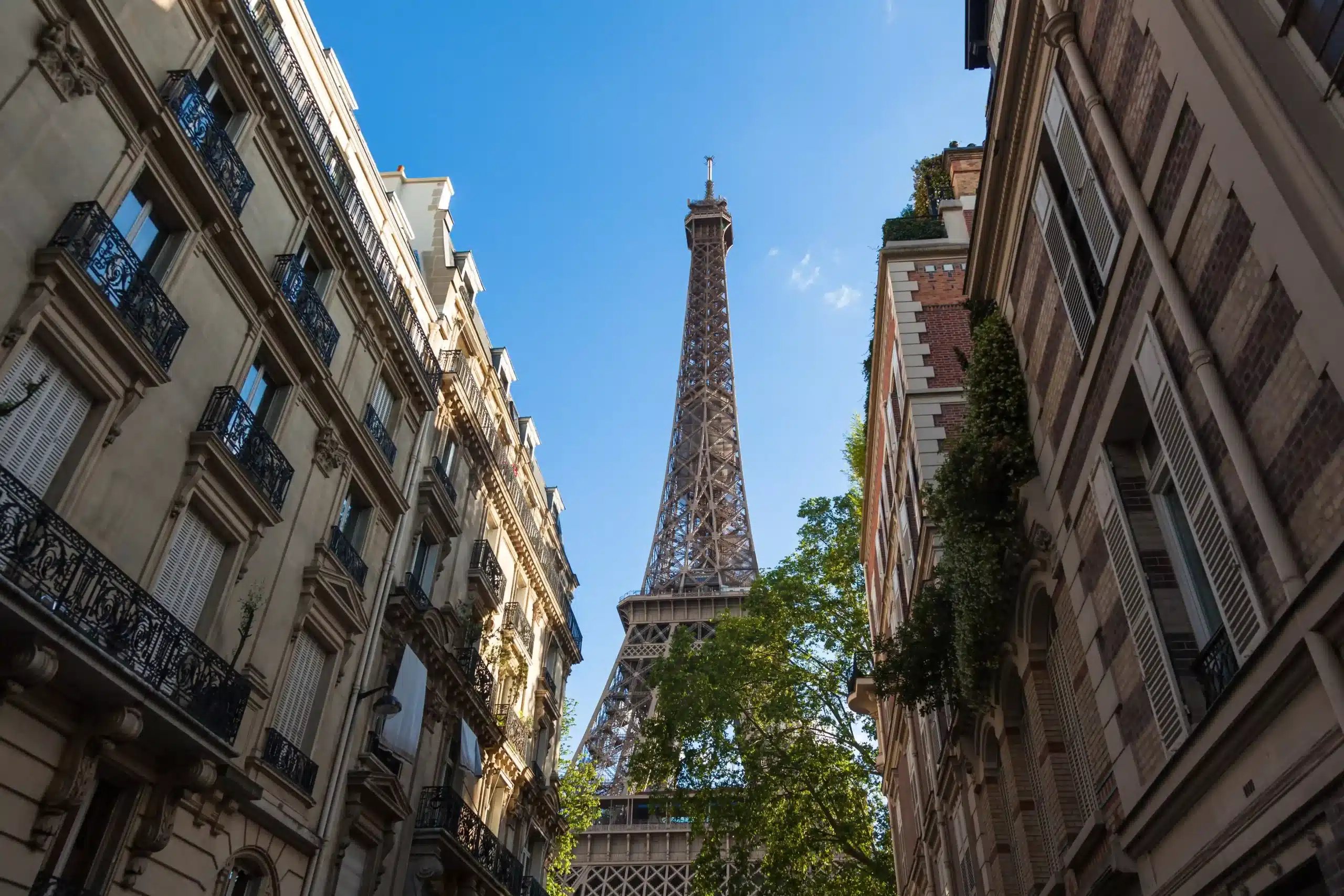
Daily life unfolds at a human scale. Neighborhoods are walkable. Commerce, culture, schools, and green space are integrated into residential streets rather than separated into zones. Architectural protections, height limits, and zoning regulations preserve not only the skyline, but the experience of living in the city itself.
This matters to buyers who no longer see property as a purely financial instrument. In Paris, ownership is inseparable from use—how you live, how often you return, and how naturally the property integrates into your life.
A Market Defined by Intentional Buyers
Since 2024, agencies specializing in international clients have reported a steady rise in American inquiries. By early 2026, Paris notaries confirmed that approximately one in four foreign buyers in the capital came from the United States.
While political uncertainty in the U.S. has contributed to this movement, financial fundamentals reinforce it. A strong dollar continues to enhance purchasing power, positioning Paris competitively against New York and London—particularly in the upper-middle and prime segments.
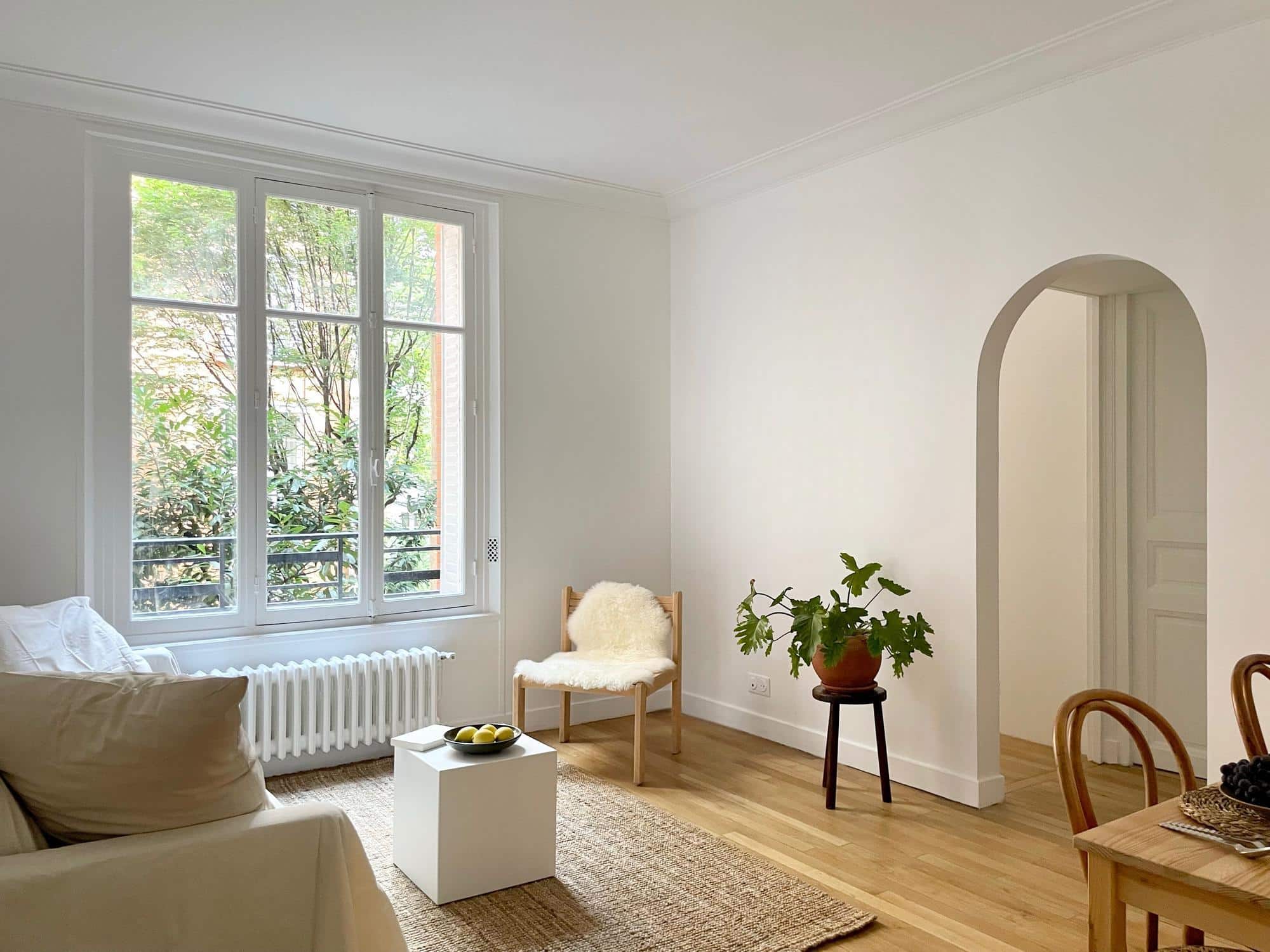
Crucially, buyer behavior has evolved. Today’s American clients are not solely pursuing symbolic addresses. They are prioritizing livability, light, layout, and neighborhood rhythm—criteria aligned with long-term use rather than short-term returns.
Where Americans Are Buying: A Nuanced Map
Historic Left Bank neighborhoods such as Odéon and the Sorbonne remain enduring favorites, valued for intellectual heritage and proximity to institutions. Le Marais continues to attract buyers seeking architectural character, cultural density, and independent retail.
At the same time, demand has broadened. The Nouvelle Athènes area of the 9th arrondissement appeals to buyers drawn to authenticity, local commerce, and creative energy. Rue des Martyrs has become emblematic of everyday Parisian life—dynamic, diverse, and deeply neighborhood-oriented.
Montparnasse in the 14th arrondissement offers another profile entirely: larger apartments, green space, theaters, and a strong sense of community. It attracts buyers who want Paris to function as a true home, not a pied-à-terre.
In western Paris—the 7th, 8th, 16th, and 17th arrondissements—American buyers with family or long-term plans gravitate toward residential calm, bilingual schooling, and proximity to major parks. The Golden Triangle of the 8th remains the epicenter of luxury, where scarcity and international demand continue to support pricing at the highest levels.
| Category | Arrondissements | Price Range (€/m²) | Character |
|---|---|---|---|
| Premium | 6th, 7th | €12,000-€15,000 | Prestige addresses, cultural centers |
| Established Central | 1st, 2nd, 8th | €10,500-€13,500 | Historic, commercial hubs |
| Emerging Central | 3rd, 4th, 9th, 10th, 11th | €8,400-€10,200 | Lifestyle appeal, dining, nightlife |
| Family-Friendly | 15th, 16th, 17th | €8,300-€11,000 | Schools, parks, residential |
| Value Entry | 12th, 13th, 19th, 20th | €7,300-€9,300 | Affordability, parks, growth potential |
Price Pressure Without Excess
American participation has contributed to localized price increases, particularly in prime neighborhoods where buyers are more inclined to transact at asking—or above—on exceptional properties.
However, Paris remains structurally distinct from more volatile markets. Supply constraints, a high proportion of owner-occupiers, and deliberate transaction processes limit speculative excess. Price movements are measured, reinforcing Paris’s role as a capital-preservation market rather than a momentum trade.
| Year | Avg Price/m² | Change | Market Phase |
|---|---|---|---|
| 2020 | ~€10,800 | Peak | Post-pandemic surge |
| 2022 | ~€10,400 | -3.7% | Rate shock begins |
| 2024 | ~€9,600 | -7.7% | Correction trough |
| 2026 | ~€9,827 | +2.4% | Stabilization |
Paris in a European Context
Across Europe, residential investment performance has become increasingly city-specific. In this environment, Paris ranks among the most attractive markets for long-term investors—valued for its low volatility, liquidity, and enduring global relevance.
Unlike cities where returns depend heavily on financial cycles, Paris benefits from fundamentals that transcend them: constrained supply, cultural centrality, and sustained international demand.
France and the U.S.: Complementary, Not Competing
Viewed strategically, U.S. and French real estate markets serve different—but complementary—objectives.
The United States offers scale, yield potential, and operational flexibility. It remains attractive for investors focused on performance and liquidity.
France, and Paris in particular, offers regulatory stability, scarcity, and lifestyle value. Growth is moderate, but resilience is high.
For internationally mobile buyers, diversification between the two markets can be both financially prudent and personally meaningful—balancing return-oriented assets in the U.S. with a stabilizing anchor in Paris.
Paris as an Anchor City
Increasingly, American owners use Paris properties as extended residences, European bases, or family gathering points. Children study abroad. Owners return regularly. Mid-term rentals support usage without compromising personal access.
Paris rewards owners who intend to inhabit their properties—physically or emotionally.
The MetParis Perspective
At Metropolitan Properties Paris, we see this shift daily. Buyers are less concerned with timing the market than with choosing the right apartment, in the right neighborhood, for the life they want to lead.
Paris in 2026 is not about urgency. It is about clarity.
For buyers seeking permanence, diversification, and an enduring way of life, Paris remains one of the most compelling real estate decisions in the world.
Download our free guide to
buying property in Paris
If you wish to contact us to discuss your project, please don’t hesitate to reach out. We’ll be delighted to help you.
Other articles
Why Buying in Paris Feels Nothing Like Home
Last week, Emma walked through an apartment in the northern Marais with a couple from California. Beautiful space—high ceilings, original
Paris Real Estate News & Market Update (2026)
Property Market Snapshot After two years of correction, the Paris real estate market has entered a phase of healthy stabilization
Understanding Mortgage Rate France interest for Non-Residents
Key takeaways Fixed-rate mortgages remain competitive for typical 15- to 25-year terms, with rates ranging from the low 3% range up to the mid-4%