
Imagine adding four vibrant, healthy years to your life — simply by choosing where you live. Welcome to Paris.
Why do people in France live longer and why do so many Americans choose to move to Paris? Part of the answer can be found in the texture of ordinary daily life. A typical morning in Paris often begins with a short walk to the local boulangerie, a quiet coffee at a neighbourhood café, and a pace of life that feels noticeably less hurried than in many major American cities. What appears, at first glance, to be simple lifestyle charm is increasingly recognised by researchers as something more significant: an environment that supports longer, healthier living.
Americans living in Paris frequently describe this shift not as a dramatic reinvention, but as a gradual recalibration of everyday habits. Paris is one of the world’s most walkable cities, where daily routines naturally incorporate movement, social interaction, fresh food, and access to public spaces. Studies on longevity and quality of life in France consistently point to these factors, combined with universal healthcare and lower day-to-day stress, as important contributors to France’s high life expectancy.
France regularly ranks among the countries with the longest life expectancy in the world, with average life expectancy now exceeding 83 years according to recent UN data. Researchers studying the French lifestyle have found that longevity in France is linked less to genetics or isolated health trends and more to the structure of daily life itself: walkable urban design, strong social connections, access to healthcare, balanced eating habits, and a culture that places unusually high value on quality of life.
For many international buyers, retirees, and families considering moving to Paris, these lifestyle advantages are becoming increasingly relevant. The appeal of Paris is no longer only cultural or aesthetic. Increasingly, it is also practical: a healthier, more connected, and potentially longer way of living.
Contact Us and let’s discuss what you’re looking for.
- Personalized advice
- Local market insight
- End-to-end support
83.7
France life expectancy at birth — UN 2026
+4
Extra years gained living in France vs. the U.S.
76.9
France healthcare index — among the world’s best
Four Extra Years — and What to Do With Them
France consistently ranks among the countries with the highest life expectancy in the world, and recent demographic data suggests the gap between France and countries such as the United States continues to widen. According to the United Nations World Population Prospects 2026, average life expectancy in France has reached 83.7 years, approximately four years higher than current U.S. averages. For many Americans considering moving to France or retiring in Paris, these statistics are becoming increasingly difficult to ignore.
The numbers become even more striking later in life. A person in France who reaches the age of 65 can expect to live, on average, to 87.3 years old, while those who reach 80 are statistically expected to live beyond 90. These are not speculative forecasts, but demographic calculations based on current mortality and healthcare data. Increasingly, researchers studying longevity in France point to a combination of healthcare access, walkable cities, lower stress levels, diet, and stronger social integration as major contributing factors.
Data from INSEE, France’s national statistics agency, further highlights the country’s ageing population and high survival rates among older adults. In 2024 alone, more than 14,000 people in France died aged 100 or older, representing a growing percentage of the national population. In practical terms, the French centenarian is becoming less exceptional and more representative of a broader trend toward longer, healthier ageing.
One of the most important reasons behind France’s high life expectancy is the country’s healthcare system. France consistently ranks among the countries with the best healthcare systems in the world, combining broad accessibility with high clinical standards. France’s healthcare index score of 76.9 reflects not only medical quality, but also the ease with which residents can access preventative care, specialists, and long-term treatment without significant financial barriers. In France, healthcare is integrated into daily life in a way that encourages early treatment, consistent care, and long-term wellbeing rather than reactive emergency intervention.
For retirees, international residents, and families considering living in Paris or elsewhere in France, these healthcare and longevity advantages increasingly form part of the broader appeal. The French lifestyle is not simply associated with living longer, it is increasingly associated with living better for longer.
“The French long life is not the product of any single secret. It is the accumulated result of a society that has, for a very long time, taken the business of living seriously.”
— Metropolitan Properties Paris
The Science Behind the Art de Vivre

Research into longevity in France increasingly suggests that the country’s health advantage is not simply a matter of wealth, genetics, or individual discipline. A major study published in The New England Journal of Medicine followed more than 73,000 adults aged between 50 and 85 across the United States and sixteen European countries over a twelve-year period. One of its most significant findings was that affluent adults in western and northern Europe — including France — experienced mortality rates roughly 35% lower than equally wealthy Americans.
The implication was striking: the difference could not be explained by income alone. Researchers concluded that the broader living environment including healthcare systems, urban design, social connection, stress levels, diet, and daily routines plays a major role in determining long-term health outcomes and life expectancy.
Irene Papanicolas, a Brown University researcher involved in the study, noted that “the environment itself shapes how long and how well people live.” For many Americans living in Paris or relocating to France, that conclusion feels immediately recognisable. What appears on the surface to be a more balanced and pleasurable way of life walkable neighbourhoods, slower daily rhythms, easier healthcare access, stronger social interaction, and higher quality food culture increasingly aligns with what researchers identify as key contributors to healthy ageing and longevity.
This is one of the reasons the French lifestyle continues to attract international retirees, remote professionals, and families seeking a higher quality of life in Europe. The benefits of living in France are not limited to scenery or culture. Increasingly, they are supported by measurable health and longevity data.
Perhaps most encouraging of all is that these advantages are not exclusive to people born in France. Studies on relocation and lifestyle adaptation increasingly suggest that many of the health benefits associated with French life including lower stress, increased walking, stronger social integration, and improved work-life balance can be experienced by those who choose to live there as well.
Tell us about your property search.
Whether you’re just starting or ready to buy, we’re here to help you navigate the process
A City Designed for the Long Game

Researchers studying longevity and quality of life consistently identify the same core factors associated with healthier ageing: regular physical movement, strong social connection, access to fresh food, manageable stress levels, and reliable healthcare systems. One reason life expectancy in France remains among the highest in the world is that cities such as Paris naturally integrate many of these habits into everyday life.
Paris is widely considered one of the world’s most walkable cities. Unlike urban environments designed primarily around cars and long commutes, daily life in Paris is structured around neighbourhood accessibility. Pharmacies, cafés, local markets, bakeries, parks, schools, and medical services are often reachable within a short walk. As a result, residents incorporate consistent low-impact movement into their daily routines without consciously treating it as exercise.
This walkable urban design has measurable health benefits. Studies on healthy ageing and cardiovascular health have repeatedly linked regular walking with lower stress levels, improved heart health, reduced obesity rates, and longer life expectancy. In Paris, physical activity is not separated from daily life it is embedded within it. The traditional Parisian habit of walking through the city, once associated primarily with culture and leisure, increasingly aligns with modern public-health research on longevity and wellbeing.
Food culture also plays a central role in the French lifestyle and its association with long-term health. French eating habits tend to prioritise fresh ingredients, smaller portions, slower meals, and social dining rather than highly processed convenience food. Many nutrition researchers associate Mediterranean-style diets rich in vegetables, olive oil, fish, grains, and minimally processed ingredients with lower rates of cardiovascular disease and improved long-term health outcomes.
In France, these habits are not treated as temporary wellness trends or optimisation strategies. They are simply part of ordinary life. Long lunches, shared dinners, local food markets, and daily walking are woven into the structure of the city itself. For many Americans moving to Paris or relocating to France, this shift in daily rhythm becomes one of the most noticeable and healthiest aspects of life in the country.
Healthcare: Quiet, Reliable, Reassuring

For many Americans moving to France or retiring in Paris, one of the most surprising aspects of daily life is the healthcare system itself. France consistently ranks among the countries with the best healthcare systems in the world, combining broad access to medical care with comparatively low out-of-pocket costs and shorter waiting times than many international residents expect.
The experience of healthcare in France is often described less in dramatic terms than in practical ones: appointments are accessible, preventative care is encouraged, specialists are relatively easy to see, and medical treatment is generally approached as a normal part of public life rather than a financial risk. For many expats living in Paris, the absence of constant anxiety around healthcare costs becomes one of the most meaningful quality-of-life improvements after relocation.
France’s healthcare index score of 76.9 reflects the overall strength of the system, but the statistics only capture part of the experience. Equally important is the confidence residents feel in seeking treatment early rather than delaying care because of cost concerns. In practice, this encourages more consistent preventative healthcare, earlier diagnoses, and better long-term health outcomes all factors commonly associated with higher life expectancy in France.
Retirees relocating to France often cite healthcare accessibility as one of the primary reasons for choosing Paris and other French cities over alternative retirement destinations. Access to reliable public healthcare, combined with walkable neighbourhoods, lower daily stress, and strong public infrastructure, contributes significantly to France’s reputation as one of the healthiest and most liveable countries in Europe.
American expats navigating the French healthcare system for the first time frequently describe the experience with a sense of relief. The system is structured, functional, and comparatively predictable. Appointments happen, treatments are accessible, and the financial process is designed to minimise uncertainty rather than create it. In a world where healthcare increasingly feels complicated elsewhere, the French model remains remarkably calm, efficient, and reassuring.
The Question of Cost

Paris is often perceived as one of the world’s most expensive cities, but the reality of the cost of living in Paris is more nuanced than international stereotypes suggest. While housing in prime central neighbourhoods can be costly, many Americans moving to Paris discover that everyday life in France is frequently more affordable and often more efficient in the areas that most directly affect quality of life.
Compared with many major American cities, France maintains relatively moderate property taxes, predictable utility costs, comprehensive public healthcare, and one of the world’s most efficient public transportation systems. In Paris, owning a second car is often unnecessary due to the city’s extensive metro, rail, and bus network. For many expats and retirees living in Paris, transportation costs decrease significantly after relocation.
France’s approach to work-life balance also changes the economic structure of daily life in ways that are difficult to measure purely through salary comparisons. French labour laws guarantee a minimum of five weeks of paid annual leave, while healthcare access and public services are integrated into the broader social system rather than negotiated individually through employers. For many international residents, this creates a sense of financial predictability and personal stability that extends beyond traditional cost-of-living calculations.
Many Americans relocating to France also discover that Paris offers a high level of public and cultural access without requiring luxury-level spending. Museums, public gardens, neighbourhood markets, libraries, cafés, and cultural institutions are deeply integrated into everyday life and are often free or comparatively inexpensive. The city’s infrastructure is designed to make public space, culture, and community accessible to residents rather than exclusive to high-income visitors.
As a result, the lifestyle benefits of living in Paris are often less connected to conspicuous consumption and more connected to daily quality of life: walkable neighbourhoods, reliable public transport, accessible healthcare, strong public infrastructure, and consistent access to culture, food, and social life. For many expats, retirees, and international buyers, these factors significantly reshape how they evaluate both affordability and long-term wellbeing.
What the Numbers Suggest, and What They Cannot

Many of the factors that contribute to France’s high life expectancy are not dramatic on their own. Instead, they reflect a broader quality of life environment that consistently supports long-term wellbeing. France ranks relatively highly on international measures related to public safety, healthcare access, environmental quality, and social stability all conditions that researchers increasingly associate with healthier ageing and longer lives.
According to the Global Peace Index, France remains among the more stable developed countries globally, while pollution levels in major French cities have steadily improved in recent years. The country also maintains comparatively strong public infrastructure, accessible healthcare systems, walkable urban environments, and social protections that contribute to lower day-to-day stress levels for many residents.
Researchers studying longevity in France consistently emphasise that there is no single “French secret” responsible for the country’s health outcomes. Rather, the benefits appear to emerge from the interaction of multiple lifestyle and environmental factors: Mediterranean-influenced eating habits, regular daily walking, strong social connection, preventative healthcare access, public transportation, and urban design that encourages slower, more balanced living.
Paris in particular reflects many of these conditions simultaneously. The city’s walkability, access to public spaces, neighbourhood structure, healthcare infrastructure, and cultural emphasis on daily quality of life combine to create an environment that many international residents describe as noticeably healthier and less stressful than life in larger car-dependent metropolitan areas.
For Americans considering moving to Paris, retiring in France, or investing in a longer-term lifestyle change, these advantages are increasingly supported not only by personal experience, but also by demographic and public-health research. Paris is not presented by researchers as a miracle solution or wellness trend. Rather, it is increasingly understood as a city whose everyday structure naturally supports healthier, more sustainable ways of living over time.
On Making the Decision
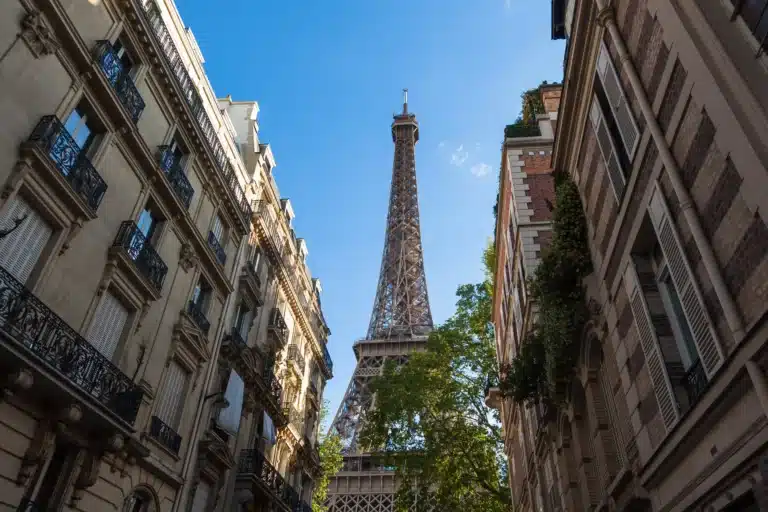
Americans considering moving to Paris often arrive at the decision from very different stages of life. Some are retirees searching for a healthier, slower, and more fulfilling lifestyle after decades of demanding work. Others are professionals in mid-career reassessing how they want to spend their time, raise their families, and structure daily life. Increasingly, many international buyers and expats are choosing Paris not only for its culture and beauty, but for its long-term quality of life advantages.
Families relocating to France frequently describe the decision in practical as well as emotional terms. They think about walkable neighbourhoods, public transportation, healthcare access, work-life balance, food culture, education, and the overall rhythm of daily life their children will experience growing up in Paris. For many Americans, the appeal of living in Paris is less about escape and more about alignment, a search for a city whose priorities more closely reflect the kind of life they want to build over time.
What many international residents discover after moving to France is that the attraction to Paris is rarely superficial. Beyond the architecture, cafés, and cultural reputation lies a broader lifestyle structure that consistently supports wellbeing: slower daily rhythms, stronger social integration, accessible healthcare, public infrastructure designed around people rather than cars, and a culture that places unusually high value on time, food, conversation, and community.
Increasingly, demographic and public-health research supports what many expats experience personally after relocating. France continues to rank among the countries with the highest life expectancy and strongest quality-of-life indicators in the world, while Paris remains one of Europe’s most walkable, culturally active, and internationally connected cities.
For retirees, families, remote professionals, and long-term international buyers, moving to Paris is often less about changing scenery than changing the structure of everyday life itself. And for many people who make the transition successfully, the improvement is felt not only in lifestyle, but in overall wellbeing, health, and long-term satisfaction.
WHY THE FRENCH ADVANTAGE IS FOR EVERYONE
A recent study in the New England Journal of Medicine followed 73,838 adults
across the U.S. and 16 European countries over 12 years.
Among its findings: the wealthiest Europeans — France included — had
mortality rates 35% lower than their equally affluent American counterparts.
The gap, researchers concluded, is cultural and systemic rather than economic.
One need not be born French to benefit from it.
Others articles

Grandeur is everything : the economic case for a Paris pied-à-terre in 2026
The Washington Post recently ran a piece making the case that Europe has grandeur and America has economic abundance. It
In Paris, a quiet market is a polite invitation
The Notaires du Grand Paris released their Q1 2026 figures recently. I have been reading these reports since I started

What the French Tax System Actually Does — and Doesn’t — Cost You
A reassuring read for the fiscally anxious The French tax system has a reputation for complexity that is, frankly, not



