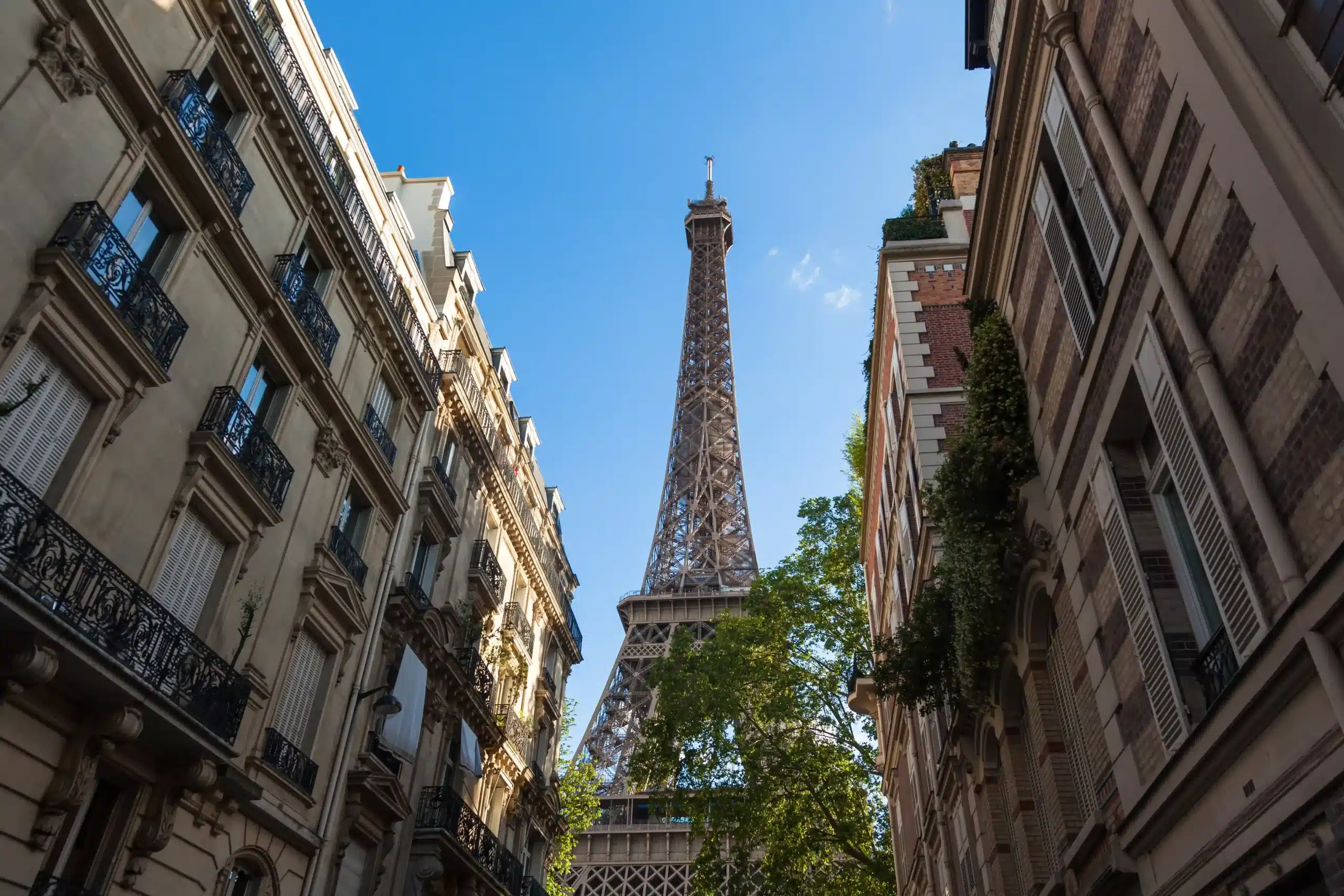
Choosing the right arrondissement in Paris: a personality test

Choosing the right arrondissement in Paris: a personality test

The most common mistake I see is choosing an arrondissement for its reputation rather than for yourself.

I once spent three days showing a couple from Southern California the 6th and 7th arrondissements. They had spent years in Paris in the 1980s, in an apartment just off the rue du Bac, two blocks from the Seine. Coming back to their old neighborhood felt like the whole point. I showed them beautiful apartments. They were unmoved.

On the fourth day, on an instinct, I took them to Montmartre. To the quartier des Abbesses, at the base of the steps leading up to Sacré-Cœur, in a building that was two hundred years old and showing its age in the best way.

They knew immediately.

Six traditional boulangeries within a five-minute walk. Three Métro lines, one visible from their window. Shopkeepers who now greet them warmly as les Américains. That apartment has been theirs for years. They count the days until they can go back.

Paris is not one market. It is twenty, each with its own density, its own sociology, its own relationship to noise and light. Choosing between them is less a real estate decision than a question about who you are and, critically, how long you plan to stay.

A pied-à-terre used for two weeks a year calls for a different calculus than one used for three months. The prestige addresses of the Left Bank offer incomparable convenience and resale strength for occasional visits. The outer arrondissements, increasingly vibrant and meaningfully more affordable, reward the buyer who actually wants to live in Paris rather than visit it.

Consultation
Speak with us
Prefer to talk it through?
Contact me and let’s discuss what you’re looking for.
Arrondissement
Character
Best for
Price level
4th
Historic, cosmopolitan
Buyers who want layered Paris
High
5th
Intellectual, ancient
Francophiles, academics
High
6th
Classic, literary, elegant
First-time buyers, definitive Paris
Very high
7th
Discreet, grand, quiet
Calm-seekers, long-stay owners
Very high
9th
Village, gastronomic, creative
Value-seekers, insider buyers
Moderate
10th
Canal, lively, mixed
Urban buyers, longer stays
Moderate-low
11th
Bohemian, restaurant-dense
Buyers off the tourist map
Moderate
12th
Green, quiet, accessible
Extended-stay buyers
Low-moderate
18th
Villagey, panoramic, artistic
Buyers seeking authentic community
Moderate-low
19th
Parc de la Villette, diverse
Budget-conscious, up-and-coming
Low
20th
Belleville, artistic
Long-stay buyers seeking value
Low-moderate

“Most buyers choose an arrondissement for its reputation. The happiest ones choose it for themselves. That difference is the whole search.”

The Left Bank

The 6th, Saint-Germain-des-Prés, delivers the Paris most Americans have in mind. Haussmannian buildings in perfect condition, the Jardin du Luxembourg, the rue du Cherche-Midi, cafés that have been famous long enough to be institutions. It is the least experimental of the premium arrondissements and the most reliably itself. Properties here rarely stay on the market, and prices reflect that certainty. Best for first-time buyers who want the definitive Paris experience. Price: very high, consistently among the top three in the city.

The 7th is the arrondissement of ministries, embassies, and old money that has never needed to announce itself. Around the rue Cler, the Musée d’Orsay, and the Faubourg Saint-Germain, it achieves a quality of Parisian calm almost impossible to find elsewhere. It suits buyers who find the 6th slightly performative, who want a neighborhood where the restaurants exist for the residents and not for the reputation. Best for buyers who value quiet, permanence, and proximity to the grandes institutions. Price: very high, comparable to the 6th.

The 5th is the oldest arrondissement in continuous intellectual occupation. The Sorbonne, the rue Mouffetard market, the Jardin des Plantes, narrow medieval streets between the Panthéon and the Seine. Prices are somewhat lower than the 6th for comparable quality, meaningful for buyers optimizing on character per euro. Best for Francophiles, academics, buyers who find the 6th too polished. Price: high, though somewhat below the 6th and 7th.

The Right Bank

The 4th, the Marais, contains multitudes: the Place des Vosges, the Île Saint-Louis, the Jewish quarter, Pompidou, Picasso, Carnavalet. The most historically layered arrondissement in Paris and the most socially mixed of the premium neighborhoods. The Île Saint-Louis sits within it like a village, quieter and with a distinctly residential feeling. Best for buyers energized rather than exhausted by proximity to culture and crowds. Price: high.

The 9th, Nouvelle-Athènes, is one of the most interesting value propositions in Paris today. Beautiful Haussmannian architecture, the rue des Martyrs food market, an excellent café and restaurant culture, and prices meaningfully below the 6th for comparable apartment quality. It suits buyers interested in where Paris is going rather than where it has been. Best for value-conscious buyers who want a neighborhood that reads as a considered choice rather than an obvious one. Price: moderate.

The 10th and 11th have undergone a transformation that was complete before most guides acknowledged it. The Canal Saint-Martin corridor in the 10th, with its iron footbridges and genuinely good restaurants, attracts a young, mixed, genuinely Parisian crowd. The 11th, stretching from the Bastille toward Oberkampf, is the arrondissement of late-night wine bars and neighborhood life that requires no planning. Both reward buyers who want to spend time in a Paris that is primarily for the people who live there. Price: moderate to moderate-low, strong value for the quality of life offered.

The 18th, particularly the quartier des Abbesses at the foot of Sacré-Cœur, offers something the grander addresses cannot: genuine village life within the city. Narrow streets, independent boulangeries, and a strong sense of neighborhood identity make it a favorite for buyers who want to feel like residents rather than visitors. Prices sit below the historic core, though they have been rising as the area’s appeal becomes better known. Best for buyers who value authenticity and community over prestige addresses. Price: moderate-low.

“A two-week address is about convenience. A three-month address is about life. They are rarely in the same arrondissement.”

For longer stays: where the better value is

A pied-à-terre used for six weeks or three months each year changes the calculus entirely. When Paris becomes your temporary home rather than your occasional backdrop, the outer arrondissements begin to make serious sense.

The 12th borders the Bois de Vincennes and has a genuinely working residential character. The Promenade Plantée, a raised linear park that predated New York’s High Line by a decade, runs through it. Prices are meaningfully lower than the inner arrondissements for comparable surface areas. Green, quiet, and consistently undervalued. Price: lower.

The 19th and 20th are the two outer arrondissements experiencing the most significant transformation. The 19th centers on the Parc de la Villette, a vast and genuinely excellent park with the Cité des Sciences and the Philharmonie de Paris. The 20th, home to Belleville with its multilingual market and long tradition of artists and immigrants, is one of the most genuinely interesting neighborhoods in Paris for a buyer prepared to look beyond conventional addresses. Both offer purchase prices substantially below the city average, with the upside that comes from buying into an area whose trajectory is clearly upward. Price: low to moderate.

A note on how to choose

The arrondissement you loved as a tourist is not necessarily the one that will suit you as an owner. The length of your stays changes everything. A weekend address and a three-month address are not the same apartment, and they are often not in the same part of the city.

The couple from California who bought in Abbesses had spent decades believing they knew exactly where they wanted to be. They were wrong, and their apartment is better for it. What I love most is watching a client fall for a neighborhood they had never considered, land in the property that fits them best, and years later still be so happy there they have made the whole place their own.

That is the actual job.

Tell us about your property search

Whether you’re just starting or ready to buy, we’re here to help you navigate the process

Download our free guide to
buying property in Paris

<

About us

Navigating the Paris real estate market can be challenging due to language, cultural, legal, and market differences. That’s why it’s crucial to have a trusted advisor by your side. Our full-time agents, fluent in English, French, and Spanish, and with deep expertise in Paris luxury real estate, offer you comprehensive support from start to finish.

Most Recent Posts

Category

We make it happen 

Contact Details

Contact Details

Metropolitan Properties Paris logo in anthracite font
Subscribe to our newsletter to stay updated !